Some people believe the Shroud of Turin has been proved a medieval forgery because scientific experiments using carbon dating established the age of the tested material as being from between 1260-1390 AD, more than a thousand years after the crucifixion of Jesus Christ. They believe some great artist used otherwise unknown technique to fake the image on the shroud, even though scientific tests have indicated there is no paint or dyes on the fabric. Even though subsequent experiments completely invalidated the initial carbon dating results, people continue to cite those first results as the primary reason to reject the potential authenticity of the shroud. They simply don’t want to believe the shroud could be real.
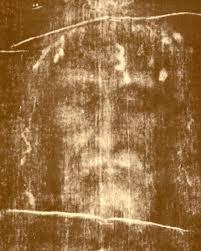
Those doubters simply do not understand the many qualities of the shroud that have been well-documented: for example, the shroud has pollens that are native to that particular location in Israel where the crucifixion took place, and a second carbon dating test puts the age of the shroud all the way back to the time of Christ. There is no known colorant of any kind on the shroud. None. But scientific tests have proved there is blood. Copious amounts of human blood, type AB.
Because of the blood on the shroud, there is little reason to doubt the Shroud of Turin once briefly covered a real human corpse which had injuries that closely match the description of Jesus’ crucifixion found in the gospels. The only real question left about the shroud is, can we be absolutely sure the corpse was Jesus? The scientific evidence strongly suggests it was. But that evidence isn’t conclusive.
The crucifixion of Jesus was no ordinary crucifixion–it was exceptionally painful even by Roman standards. The pain must have been unbearable. The injuries produced excess bilirubin that was found in the bloodstains of the person the shroud once covered. But those bloodstains didn’t create the famous “photo negative” image on the shroud. Something else, some other unknown process burned that image into the cloth–the resurrection, perhaps?

This scientific paper written by Dr. Carlo Goldoni discusses the significance of bilirubin on the Shroud of Turin. Bilirubin is the yellowish substance found in human blood that forms after red blood cells break down before it is can be excreted as waste from the body. The bloodstains on the shroud appear dark until exposed to light. After about thirty seconds of exposure to bright light, the stains will turn a bright crimson. Scientists originally thought the coloration was due to myrrh or some other preservative covering the body, but they have since determined the stains were due to bilirubin in the blood. The most logical explanation for this excessive bilirubin is that the person covered by the shroud suffered the very same injuries that were described in the gospels as part of Jesus’s crucifixion.
The mere fact that the bloodstains contained excessive amounts of real bilirubin lends credence to the belief that the shroud is authentic, because it means the person the shroud once covered suffered horribly before an agonizing, painful death, very much like Jesus.
Exactly like Jesus, in fact.
Speak Your Mind