Dear Dr. Collins, I'd like to begin by saying that I have tremendous respect for your work on the Human Genome Project. I enjoyed your book The Language of God so much that even quoted you a couple of times in my book, Counterargument for God. So, if there is a human being on planet Earth as qualified to answer my question as (atheist) biologist Jerry Coyne, it would appear to be either you, or (Catholic) biology professor Ken Miller, whose work I'm most familiar with from watching his lectures posted on You Tube that attack intelligent design. However, I did appreciate his calm and pleasant demeanor on display while he ridiculed my personal beliefs. One thing that you and Professor Miller seem to share in common with Professor Coyne is your apparent belief in the infallibility of evolution theory, and that descent is the only viable explanation for the origin of species. Unsurprisingly, Professor Coyne didn't respond to his open letter. However, I didn't really try to hide the fact that I am a creationist and an advocate of intelligent design. Professor Coyne may have been hostile to the source, rather than the questions asked. In retrospect, I probably could have done a better job of framing my questions without antagonizing him. Professor Benoit LeBlanc was kind enough to attempt answering them, but unfortunately his answer required Deep Time that I don't believe is available in the scenario we're hopefully about to discuss. I don't believe my personal religious beliefs will keep either of you gentlemen from answering my questions because we are all … [Read more...]
Christian atheists
Some words just don't seem to go together. For example, there's honest politician. Another phrase that seems somewhat oxymoronic is lucky loser. And then there's Christian atheist. Seriously? How can anyone be an atheist and a Christian? The contradiction of the two terms seems painfully obvious. The short answer is, you can't. This isn't another way of describing Christian apostasy -- apostates tend to be activists, relentless and very aggressive with their attacks on Christianity. Many Christian apostates not only reject the tenets of their former faith, they seek to eradicate belief in weak Christians. Wikipedia defined a Christian atheist as someone who rejects belief in any sort of a supernatural God, but tries to emulate the moral example of Jesus. I must admit that I've never encountered a Christian atheist before -- in fact, the only person that might have fit the description of one was Mahatma Gandhi, and he was murdered years before I was born. Maybe it's just me, but it doesn't seem to make any sense to reject that Jesus was the Christ, yet make him your primary role model. Let's face facts -- Jesus wasn't real big on having fun, was he? Think about it...if atheism really is true, and Darwin's theory about how life randomly descended into modern animals without rhyme or reason, then the only sensible rule for society should truly be survival of the fittest. Every man for himself and woman for herself, and get all you can while you can. After all, you're going to die soon enough, and there goes your chance to lie, cheat, steal, commit … [Read more...]
How does the brain record memories?
I've said this before, and I'll say it again: I am not a scientist, nor do I pretend to be one. However, that's never going to stop me from asking serious questions to those people who do claim or pretend to be professional scientists. Recently an atheist friend (probably former friend, to be technically correct. I think he "unfriended" me after this exchange) asserted in our discussion as a statement with authority that neuroscientists have pretty much figured out how the human brain works. Really? I thought. It's been my considered opinion for some time now that we humans aren't nearly as smart as we think. So I asked my now-former friend what I thought was a pretty simple and straightforward question: how does our brain store a memory? I do know how computers manage the feat but for humans, I can only guess. Most people understand that computers mimic the human brain in several respects. However, as a former developer, I know quite a bit about how computers go about performing their job, and the ways in which computers and the human brain are quite different. Computers and humans both have memory, meaning an ability to recall historical information for use in current and future decision-making. When we work in a computer program, our efforts are only stored temporarily in that computer's memory. For our work to become persistent and thus made available for future use, we must take specific action to save our effort in the current session to the computer's hard drive. Otherwise, when we close the browser and turn off the machine, our work is lost … [Read more...]
The origin of the universe
Once upon a time, some of the smartest people in the world thought the universe might have always existed in its current state, hence the name steady state theory was given to the idea of an eternal universe that has always existed in more or less its current form. Aristotle. Bertrand Russell. Sir Fred Hoyle. These men were certainly not stupid. In fact, they were among the most brilliant intellectuals of their respective eras. Coincidentally, all three of these men were atheists. They believed our allegedly "fine-tuned" universe was eternal in part because there was insufficient scientific evidence, at least in their minds, for them to believe otherwise. But they also believed the universe had always existed as it currently is because of the implications created by the alternative, a fine-tuned universe that once had a beginning. Hoyle famously said, Some super-calculating intellect must have designed the properties of the carbon atom; otherwise the chance of my finding such an atom through the blind forces of nature would be utterly minuscule. A common sense interpretation of the facts suggests that a super-intellect has monkeyed with physics, as well as with chemistry and biology, and that there are no blind forces worth speaking about in nature. The numbers one calculates from the facts seem to me so overwhelming as to put this conclusion almost beyond question. Clearly, the idea of an eternal universe has more appeal than the idea of a fine-tuned universe produced from absolute nothingness, possibly because it is less complex. Fred Hoyle … [Read more...]
The Pearl: 2 May 2015
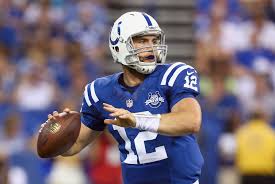
Biggest thing I learned my first year in the NFL is nobody gives a crap about what you did last week. The league is about what have you done for me now. That's the NFL. It's also our culture. So you keep working hard because that's the biggest truth about football. -- Andrew Luck Once upon a time, while arguing about a call with the referee during a game, coach Jerry Glanville famously claimed that the initials of the NFL really meant "Not For Long" rather than "National Football League" because a bad call could cost someone his job. And it's obviously true. The NFL Player's Association has estimated that the average length of a player's career is 3.5 years. NFL Commissioner Roger Goodell replied: There is a little bit of a misrepresentation or a misunderstanding on that. Frequently, it is said that the average career is about 3.5 years. In fact, if a player makes an opening day roster, his career is very close to six years…If you are a first-round draft choice, the average career is close to nine years. That 3.5-year average is really a misrepresentation. What it adds is a lot of players who don’t make an NFL roster and it brings down the average. Only the best of the best football players make it into the NFL, and then mostly because of their God-given, natural athletic talent. However, the right to stay there must be earned every day, by preparation and hard work. … [Read more...]